Thursday, August 30, 2012

This Day in History 8/30/12


          On this day in 1967, Thurgood Marshall becomes the first African American to be confirmed as a Supreme Court justice. He would remain on the Supreme Court for 24 years before retiring for health reasons, leaving a legacy of upholding the rights of the individual as guaranteed by the U.S. Constitution.
          From a young age, Marshall seemed destined for a place in the American justice system. His parents instilled in him an appreciation for the Constitution, a feeling that was reinforced by his schoolteachers, who forced him to read the document as punishment for his misbehavior. After graduating from Lincoln University in 1930, Marshall sought admission to the University of Maryland School of Law, but was turned away because of the school's segregation policy, which effectively forbade blacks from studying with whites. Instead, Marshall attended Howard University Law School, from which he graduated magna cum laude in 1933. Marshall later successfully sued Maryland School of Law for their unfair admissions policy.
          Setting up a private practice in his home state of Maryland, Marshall quickly established a reputation as a lawyer for the "little man." In a year's time, he began working with the Baltimore NAACP (National Association for the Advancement of Colored People), and went on to become the organization’s chief counsel by the time he was 32, in 1940. Over the next two decades, Marshall distinguished himself as one of the country's leading advocates for individual rights, winning 29 of the 32 cases he argued in front of the Supreme Court, all of which challenged in some way the 'separate but equal' doctrine that had been established by the landmark case Plessy v. Ferguson (1896). The high-water mark of Marshall's career as a litigator came in 1954 with his victory in Brown v. Board of Education of Topeka. In that case, Marshall argued that the 'separate but equal' principle was unconstitutional, and designed to keep blacks "as near [slavery] as possible."
          In 1961, Marshall was appointed by then-President John F. Kennedy to the U.S. Court of Appeals for the Second Circuit, a position he held until 1965, when Kennedy's successor, Lyndon B. Johnson, named him solicitor general. Following the retirement of Justice Tom Clark in 1967, President Johnson appointed Marshall to the Supreme Court, a decision confirmed by the Senate with a 69-11 vote. Over the next 24 years, Justice Marshall came out in favor of abortion rights and against the death penalty, as he continued his tireless commitment to ensuring equitable treatment of individuals--particularly minorities--by state and federal governments.

Republican Convention Begins

 
Mitt Romney becomes the Republican Party’s official candidate in the race against President Obama
By Scholastic News Kid Reporters Topanga Sena and Shelby Fallin

After the first day of the Republican National Convention was cancelled due to Tropical Storm (now Hurricane) Isaac, the party got started in a big way on Tuesday. Ann Romney, wife of Republican presidential nominee Mitt Romney, and New Jersey Governor Chris Christie were the biggest names in a night of heavy-hitter speakers.

Romney spoke about her 42-year marriage to the presidential candidate, saying they did not have a storybook relationship. “We had a real marriage,” she said, noting their lives of raising five sons and her battles against breast cancer and Multiple Sclerosis.

Mrs. Romney mostly left politics out of her speech.

“Tonight, I want to talk about love,” she said. She talked about how the couple jumped into marriage as college students, living in a basement apartment. “Our desk was a door propped up on sawhorses; our dining room table was a fold down ironing board in the kitchen,” she said. “Those were very special days.”

She quickly moved on to outlining her husband’s successes as a businessman.

“He is successful at everything he does,” she said, as she wrapped up her speech.

As delegates jumped to their feet applauding, her husband surprised her on stage with a hug and kiss.

They then took seats in the audience to listen to New Jersey Governor Chris Christie’s keynote address, the final speech of the first night of the convention.

Christie began his speech in support of Romney’s presidency by talking about his own background, a similar theme with every speaker last night.

“I am the son of an Irish father and a Sicilian mother,” he said. “Mom was tough as nails and didn't suffer fools at all. The truth was she couldn't afford to. She spoke the truth—bluntly, directly, and without much varnish.”

That’s a characteristic Christie is also famous for, which proved true as he took on the Democratic administration’s handling of health care legislation and the national debt. He drove home the evening’s message of “We Built It,” by defining a list of differences between the Republican and Democratic party philosophies.

"We believe in telling seniors the truth about our overburdened entitlements," he said. "They believe seniors will always put themselves ahead of their grandchildren."

REACTIONS FROM THE FLOOR

Ann Romney’s job as one of the main speakers of the night was to give a human face to the Republican candidate. According to the response from delegates in the hall, she succeeded.

“I loved Ann Romney’s speech,” said Marcia Silva, a delegate from New Jersey. “It definitely showed a softer side of Mitt Romney that a lot of people didn’t know. I cried at times.”

Delegates also seemed inspired by Christie's speech as they filed out of the convention center after the speech, which ended around 11 p.m.

“When he was talking about some of the problems that we have right now and what we need to do to correct them, I think he was very straightforward with it and that’s a good thing," said California delegate Maurice Lieberman. "We need more of that.”

Victor Marani, also a delegate from California, agreed.

“Governor Christie is the most genuine person you are ever going to see in politics," he told Scholastic News. "He’s straightforward, he tells it to you the way it is, and he speaks right to you, which is very important."

The Scholastic News Kids Press Corps will be at the Republican National Convention and will have all the latest news from the convention floor. Stay tuned to the Scholastic News Kids Press Corps Blog and the Election 2012 website for the most up-to-date stories, videos, and interviews from Tampa!

ELECTION 2012
Keep up with all the latest election news on the Election 2012 website.

Wednesday, August 29, 2012

This Day in History 8/29/12


          Hurricane Katrina makes landfall near New Orleans, Louisiana, as a Category 4 hurricane on this day in 2005. Despite being only the third most powerful storm of the 2005 hurricane season, Katrina was the worst natural disaster in the history of the United States. After briefly coming ashore in southern Florida on August 25 as a Category 1 hurricane, Katrina gained strength before slamming into the Gulf Coast on August 29. In addition to bringing devastation to the New Orleans area, the hurricane caused damage along the coasts of Mississippi and Alabama, as well as other parts of Louisiana.
          New Orleans Mayor Ray Nagin ordered a mandatory evacuation of the city on August 28, when Katrina briefly achieved Category 5 status and the National Weather Service predicted "devastating" damage to the area. But an estimated 150,000 people, who either did not want to or did not have the resources to leave, ignored the order and stayed behind. The storm brought sustained winds of 145 miles per hour, which cut power lines and destroyed homes, even turning cars into projectile missiles. Katrina caused record storm surges all along the Mississippi Gulf Coast. The surges overwhelmed the levees that protected New Orleans, located at six feet below sea level, from Lake Pontchartrain and the Mississippi River. Soon, 80 percent of the city was flooded up to the rooftops of many homes and small buildings.
          Tens of thousands of people sought shelter in the New Orleans Convention Center and the Louisiana Superdome. The situation in both places quickly deteriorated, as food and water ran low and conditions became unsanitary. Frustration mounted as it took up to two days for a full-scale relief effort to begin. In the meantime, the stranded residents suffered from heat, hunger, and a lack of medical care. Reports of looting, rape, and even murder began to surface. As news networks broadcast scenes from the devastated city to the world, it became obvious that a vast majority of the victims were African-American and poor, leading to difficult questions among the public about the state of racial equality in the United States. The federal government and President George W. Bush were roundly criticized for what was perceived as their slow response to the disaster. The head of the Federal Emergency Management Agency (FEMA), Michael Brown, resigned amid the ensuing controversy.
          Finally, on September 1, the tens of thousands of people staying in the damaged Superdome and Convention Center begin to be moved to the Astrodome in Houston, Texas, and another mandatory evacuation order was issued for the city. The next day, military convoys arrived with supplies and the National Guard was brought in to bring a halt to lawlessness. Efforts began to collect and identify corpses. On September 6, eight days after the hurricane, the Army Corps of Engineers finally completed temporary repairs to the three major holes in New Orleans' levee system and were able to begin pumping water out of the city.
          In all, it is believed that the hurricane caused more than 1,300 deaths and up to $150 billion in damages to both private property and public infrastructure. It is estimated that only about $40 billion of that number will be covered by insurance. One million people were displaced by the disaster, a phenomenon unseen in the United States since the Great Depression. Four hundred thousand people lost their jobs as a result of the disaster. Offers of international aid poured in from around the world, even from poor countries like Bangladesh and Sri Lanka. Private donations from U.S. citizens alone approached $600 million.
          The storm also set off 36 tornadoes in Mississippi, Alabama, Georgia, Pennsylvania, and Virginia, resulting in one death.
          President Bush declared September 16 a national day of remembrance for the victims of Hurricane Katrina

Tuesday, August 28, 2012

This Day in History 8/28/12


          While visiting family in Money, Mississippi, 14-year-old Emmett Till, an African American from Chicago, is brutally murdered for flirting with a white woman four days earlier. His assailants--the white woman's husband and her brother--made Emmett carry a 75-pound cotton-gin fan to the bank of the Tallahatchie River and ordered him to take off his clothes. The two men then beat him nearly to death, gouged out his eye, shot him in the head, and then threw his body, tied to the cotton-gin fan with barbed wire, into the river.
          Till grew up in a working-class neighborhood on the south side of Chicago, and though he had attended a segregated elementary school, he was not prepared for the level of segregation he encountered in Mississippi. His mother warned him to take care because of his race, but Emmett enjoyed pulling pranks. On August 24, while standing with his cousins and some friends outside a country store in Money, Emmett bragged that his girlfriend back home was white. Emmett's African American companions, disbelieving him, dared Emmett to ask the white woman sitting behind the store counter for a date. He went in, bought some candy, and on the way out was heard saying, "Bye, baby" to the woman. There were no witnesses in the store, but Carolyn Bryant--the woman behind the counter--claimed that he grabbed her, made lewd advances, and then wolf-whistled at her as he sauntered out.
          Roy Bryant, the proprietor of the store and the woman's husband, returned from a business trip a few days later and found out how Emmett had spoken to his wife. Enraged, he went to the home of Till's great uncle, Mose Wright, with his brother-in-law J.W. Milam in the early morning hours of August 28. The pair demanded to see the boy. Despite pleas from Wright, they forced Emmett into their car. After driving around in the Memphis night, and perhaps beating Till in a toolhouse behind Milam's residence, they drove him down to the Tallahatchie River.
          Three days later, his corpse was recovered but was so disfigured that Mose Wright could only identify it by an initialed ring. Authorities wanted to bury the body quickly, but Till's mother, Mamie Bradley, requested it be sent back to Chicago. After seeing the mutilated remains, she decided to have an open-casket funeral so that all the world could see what racist murderers had done to her only son. Jet, an African American weekly magazine, published a photo of Emmett's corpse, and soon the mainstream media picked up on the story.
          Less than two weeks after Emmett's body was buried, Milam and Bryant went on trial in a segregated courthouse in Sumner, Mississippi. There were few witnesses besides Mose Wright, who positively identified the defendants as Emmett's killers. On September 23, the all-white jury deliberated for less than an hour before issuing a verdict of "not guilty," explaining that they believed the state had failed to prove the identity of the body. Many people around the country were outraged by the decision and also by the state's decision not to indict Milam and Bryant on the separate charge of kidnapping.
          The Emmett Till murder trial brought to light the brutality of Jim Crow segregation in the South and was an early impetus of the African American civil rights movement.

Monday, August 27, 2012

This Day in History 8/27/12


          On August 27, 1937, Captain George E. T. Eyston breaks his own automobile land speed record at the Bonneville Salt Flats in Utah, raising the mark to 345.49 mph.
          Located approximately 80 miles west of Salt Lake City, Utah, the Bonneville Salt Flats were formed by the evaporation of a huge Ice Age-era lake. Near the end of the 19th century, the flats hosted a bicycle competition arranged as a publicity stunt by the publishing magnate William Randolph Hearst. Then, in 1914, the daredevil racer Teddy Tezlaff drove his Blitzen Benz vehicle at 141.73 mph to set an unofficial land speed record at the flats. Bonneville truly took off as a racing destination thanks to the efforts of Utah native Ab Jenkins, who set several endurance speed records there beginning in 1925, driving a Studebaker dubbed the Mormon Meteor. In 1935, the British racing legend Sir Malcolm Campbell set a world land speed record of 301.126 mph in his famous Bluebird, and since then the flats became the standard course for land speed record attempts.
          Drivers who attempted to set the world land speed record, or the fastest speed traveled on land in a wheeled vehicle, had to complete two mile-long runs in opposite directions, within a space of sixty minutes. George Eyston, an engineer and retired British Army captain, had set the previous record of 311.42 mph at Bonneville in November 1936. On his August 27 run, he hit 347.49 mph on the outbound trip and 343.51 on the return; his new record, 345.49, was the average of the two. As Eyston told the press at the time, he did not even bring his vehicle, the Thunderbolt, to full throttle to achieve the record-setting speed: "I had a very comfortable ride and not once did I feel there was any danger... I wanted to be certain I set a new record, but I also wanted to be sure that the car and I got through in good shape."
          By September 1938, Eyston had raised the land speed record to 357.5 mph. In a lecture he delivered that month, Eyston described his built-for-speed Thunderbolt as having two 2,000-horsepower Rolls Royce motors geared together; the vehicle measured 35 feet long and weighed nearly 7 tons. One of Eyston's rivals, John Cobb, set a new world land speed record of 394.194 mph in 1947 at Bonneville in a car with a piston engine; thereafter, most record holders have driven jet- or rocket-powered vehicles. In October 1997, a twin turbofan jet-powered car dubbed ThrustSSC achieved 763.035 mph (the first supersonic world land speed record) over one mile at Nevada's Black Rock Desert.

Friday, August 24, 2012

This Day in History 8/24/12


          After centuries of dormancy, Mount Vesuvius erupts in southern Italy, devastating the prosperous Roman cities of Pompeii and Herculaneum and killing thousands. The cities, buried under a thick layer of volcanic material and mud, were never rebuilt and largely forgotten in the course of history. In the 18th century, Pompeii and Herculaneum were rediscovered and excavated, providing an unprecedented archaeological record of the everyday life of an ancient civilization, startlingly preserved in sudden death.
          The ancient cities of Pompeii and Herculaneum thrived near the base of Mount Vesuvius at the Bay of Naples. In the time of the early Roman Empire, 20,000 people lived in Pompeii, including merchants, manufacturers, and farmers who exploited the rich soil of the region with numerous vineyards and orchards. None suspected that the black fertile earth was the legacy of earlier eruptions of Mount Vesuvius. Herculaneum was a city of 5,000 and a favorite summer destination for rich Romans. Named for the mythic hero Hercules, Herculaneum housed opulent villas and grand Roman baths. Gambling artifacts found in Herculaneum and a brothel unearthed in Pompeii attest to the decadent nature of the cities. There were smaller resort communities in the area as well, such as the quiet little town of Stabiae.
          At noon on August 24, 79 A.D., this pleasure and prosperity came to an end when the peak of Mount Vesuvius exploded, propelling a 10-mile mushroom cloud of ash and pumice into the stratosphere. For the next 12 hours, volcanic ash and a hail of pumice stones up to 3 inches in diameter showered Pompeii, forcing the city's occupants to flee in terror. Some 2,000 people stayed in Pompeii, holed up in cellars or stone structures, hoping to wait out the eruption.
          A westerly wind protected Herculaneum from the initial stage of the eruption, but then a giant cloud of hot ash and gas surged down the western flank of Vesuvius, engulfing the city and burning or asphyxiating all who remained. This lethal cloud was followed by a flood of volcanic mud and rock, burying the city.
          The people who remained in Pompeii were killed on the morning of August 25 when a cloud of toxic gas poured into the city, suffocating all that remained. A flow of rock and ash followed, collapsing roofs and walls and burying the dead.
          Much of what we know about the eruption comes from an account by Pliny the Younger, who was staying west along the Bay of Naples when Vesuvius exploded. In two letters to the historian Tacitus, he told of how "people covered their heads with pillows, the only defense against a shower of stones," and of how "a dark and horrible cloud charged with combustible matter suddenly broke and set forth. Some bewailed their own fate. Others prayed to die." Pliny, only 17 at the time, escaped the catastrophe and later became a noted Roman writer and administrator. His uncle, Pliny the Elder, was less lucky. Pliny the Elder, a celebrated naturalist, at the time of the eruption was the commander of the Roman fleet in the Bay of Naples. After Vesuvius exploded, he took his boats across the bay to Stabiae, to investigate the eruption and reassure terrified citizens. After going ashore, he was overcome by toxic gas and died.
          According to Pliny the Younger's account, the eruption lasted 18 hours. Pompeii was buried under 14 to 17 feet of ash and pumice, and the nearby seacoast was drastically changed. Herculaneum was buried under more than 60 feet of mud and volcanic material. Some residents of Pompeii later returned to dig out their destroyed homes and salvage their valuables, but many treasures were left and then forgotten.
          In the 18th century, a well digger unearthed a marble statue on the site of Herculaneum. The local government excavated some other valuable art objects, but the project was abandoned. In 1748, a farmer found traces of Pompeii beneath his vineyard. Since then, excavations have gone on nearly without interruption until the present. In 1927, the Italian government resumed the excavation of Herculaneum, retrieving numerous art treasures, including bronze and marble statues and paintings.
          The remains of 2,000 men, women, and children were found at Pompeii. After perishing from asphyxiation, their bodies were covered with ash that hardened and preserved the outline of their bodies. Later, their bodies decomposed to skeletal remains, leaving a kind of plaster mold behind. Archaeologists who found these molds filled the hollows with plaster, revealing in grim detail the death pose of the victims of Vesuvius. The rest of the city is likewise frozen in time, and ordinary objects that tell the story of everyday life in Pompeii are as valuable to archaeologists as the great unearthed statues and frescoes. It was not until 1982 that the first human remains were found at Herculaneum, and these hundreds of skeletons bear ghastly burn marks that testifies to horrifying deaths.
          Today, Mount Vesuvius is the only active volcano on the European mainland. Its last eruption was in 1944 and its last major eruption was in 1631. Another eruption is expected in the near future, would could be devastating for the 700,000 people who live in the "death zones" around Vesuvius.

Tips for high school to college could help the high school to work transition too!

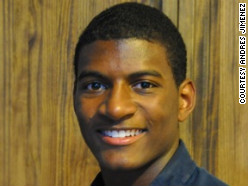
Courtesy Andres Jimenez

My View: Making the jump from high school to college

By Omar Jimenez, Special to CNN

Editor’s note:  Omar Jimenez of Kennesaw, Georgia, is a sophomore in Northwestern University’s Medill School of Journalism. He is going into his second year of training on the Northwestern basketball team.

          (CNN) – The time has finally come to venture off to college. The emotional roller coaster of excitement and apprehension is a common theme for students and parents alike.
          College is not just a place of higher learning but a preview for the real world. The social and academic environment is completely different from that of high school, making the transition tough for some students. However, it doesn’t have to be that way. Here are five keys to making the jump from high school to college and landing squarely on both feet.
Responsibility
          Honestly, just being responsible goes a long way. There are opportunities to have great social lives in college, but no one will be happy if it comes at the expense of academics.  The key is to find a personal balance between having fun and doing schoolwork.  The real responsibility comes from being able to make these decisions without the seemingly endless parental nudges given throughout high school.
          Personally, I always find that getting work done before hanging out with friends is the best route to take. It is definitely a drag to force yourself to sit down and knock out all your work, but it makes the reward of finishing for the day that much more worth it.

Studying
          Being responsible will take you pretty far in college, but what about the schoolwork? Isn’t there a lot to keep up with? Everybody says, “Don’t fall behind on your assignments,” but it is much easier said than done. Instead of focusing on a broad goal such as not falling behind, break it down into more manageable pieces.
          For starters, being organized makes studying easier and much less intimidating. Getting a planner (and using it often) is not a bad idea either. School will seem much easier through organization and proper pacing. For example, if it is Monday and there is a 140-page reading due the following Monday, don’t wait until Sunday night. Read 20 pages a night for the next week, and things will work out much better - guaranteed.

Stress relief
          Stress is something that will never go away in college, but dealing with it makes all the difference. Join a club, find a sport to play, get a Hulu or Netflix account; just find a way to pass the time where classes and grades do not matter. It will lead to more happiness, and being involved in clubs, sports, etc., will help you gain friends and popularity. From personal experience, I have found that I work much better when I am happy. I relieve stress through extracurricular activities and work more efficiently from then on. Yes, it may be a simple process, but sometimes simplicity is what makes things effective.

Communication
          It seems like all we do in life is talk, and college is no different. Being able to talk to people in college, from the dean to a dining hall worker, is important. Learning happens by communicating with other people, and part of the college experience would be wasted by always being isolated. Don’t be afraid to talk to professors after class if you need to, or to e-mail them. It often helps tremendously. Additionally, communicating with peers is critical as it creates opportunities both socially and academically. Forming a study group benefits everyone as one person can catch something that others miss and vice-versa.

Stepping back
          The last, but most important, key to making a good transition is to take a step back and realize how special it is to be in college in the first place. Take it as a privilege to get smarter, rather than a burden of more work. Getting a bad grade on an assignment sucks, but it is definitely not the worst thing that can happen.
          Schoolwork is important, yes, but don’t forget there is more than just work in college. Have some fun.
          In college, when you have days in which nothing seems to be going right, just remember what a privilege it is to be there, and that really it is not a bad day, not at all.

The opinions expressed in this commentary are solely those of Omar Jimenez.